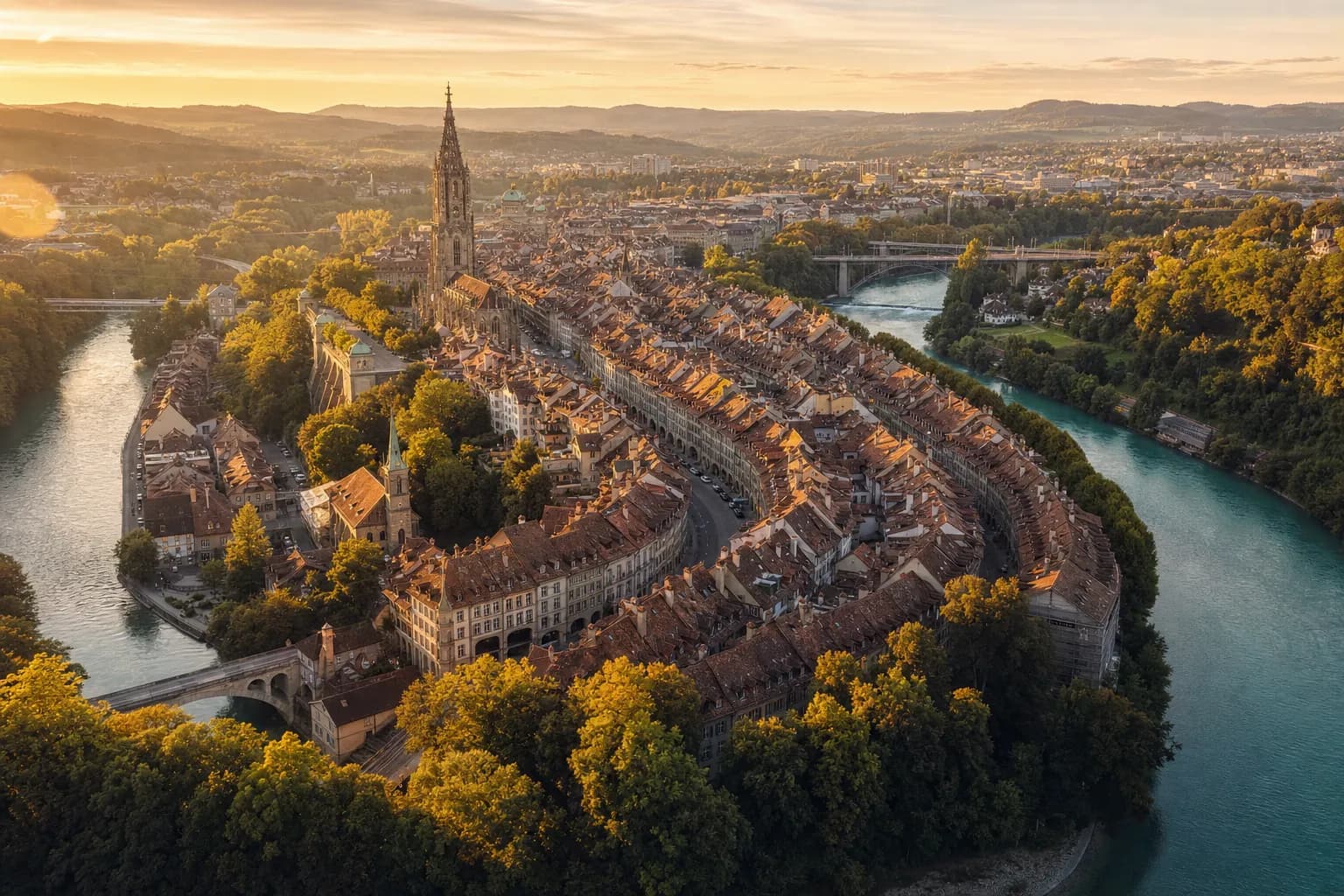
The order in Bern: commune, canton, SEM, and the canton again
In the canton of Bern your commune is the first stop and does most of the work: it checks the requirements, holds a recorded naturalisation interview with each applicant, writes the official enquiry report and promises communal citizenship through the communal body responsible. Then the cantonal Zivilstands- und Bürgerrechtsdienst examines the file, makes further enquiries if needed and asks the State Secretariat for Migration for the federal naturalisation permit. With that permit the canton grants cantonal citizenship, and at that moment you hold communal, cantonal and Swiss citizenship together.
The SEM permit is therefore the last outside approval, but not the last act: the cantonal grant that follows it is what makes you Swiss. Before any of this, you pass the written citizenship test at the body your commune designates, unless you are exempt, because the confirmation belongs to the application. The Bern canton page lists the requirements with their sources.
After the federal permit: the cantonal grant, the notice from your commune, the passport
When the SEM has issued the federal permit, the Zivilstands- und Bürgerrechtsdienst grants cantonal citizenship. Your commune tells you the decision, and you can apply for a Swiss passport and identity card. The Confederation invoices its fee separately; the communal and cantonal fees were invoiced together by the commune earlier, because the procedure only continued once they were paid.
The federal permit does not keep for years: under federal law the canton must decide within a year of receiving it, otherwise it lapses. In Bern the ordinance's guideline is the same, twelve months for the canton from receipt of the final communal promise, with the clock stopped while the federal authority is dealing with the file. One rule about moving: if you move to another commune before the promise of communal citizenship, the application lapses; after the promise, the canton of Bern stays competent even if you move.
Practice Anywhere
Download iOS AppHow long it takes: twelve months for the commune, twelve for the canton, as a guideline
Bern publishes no total but two guideline periods in its ordinance: the commune decides on the promise of communal citizenship within twelve months of the complete application as a rule, and the canton within a further twelve months from receipt of the final promise. The federal phase does not count against the canton's twelve months. Larger communes may be slower because of their volume, but the canton names no figures for them, and any breakdown into months by phase is not the canton's.
Before the clock starts you need the test, which is offered at least three times a year and may be repeated as often as necessary, and the language certificate. Both take time to book, so start with them.
The whole procedure from start to finish
- Citizenship test before filing, at the body your commune designates: written, 90 minutes, passed from 60 percent; the City of Bern asks 48 questions. Exempt: children under 16, five years of compulsory school under a Swiss curriculum including kindergarten, an upper-secondary qualification under a Swiss curriculum or a tertiary qualification in Switzerland. You pay for it yourself, CHF 260 to 390 under the cantonal frame, CHF 300 per person in Biel.
- Application with the commune, on the official forms, with proof of residence, the language certificate, the test confirmation, debt-enforcement and criminal-record extracts and the declaration on social assistance. Minor children can be included; from 12 they are heard.
- Enquiries, the recorded interview and the official report; the communal body decides on the promise of communal citizenship, as a rule within twelve months; the commune then invoices the communal and cantonal fees together.
- Cantonal examination by the Zivilstands- und Bürgerrechtsdienst and the federal permit from the SEM, which invoices its own fee.
- Cantonal citizenship with the federal permit, and with it Swiss citizenship; the commune notifies you.
Test Your Knowledge
Try 5 free questionsRequirements to keep in mind: two years in canton and commune, ten years without social assistance
Ten years in Switzerland, three of them in the five years before the application, the years between 8 and 18 counting double with at least six actual years, time with an F permit half. A C permit. At least two uninterrupted years in the canton of Bern and two in the commune where you apply. The language of your administrative district, German or French, at B1 spoken and A2 written, proven with a certificate recognised by the SEM such as the fide language passport; no certificate for native speakers, five years of compulsory school or an upper-secondary or tertiary qualification in that language.
Bern's social-assistance rule is the strictest among the large cantons: none at the time of the application and none in the ten years before it, unless it was fully repaid. Add no convictions, no debt enforcement and no tax arrears.
Fees, and where to ask
The canton charges CHF 1,150 for a single person, CHF 1,725 for married couples and registered partners and CHF 575 for a minor applying alone; children included in a parent's application are free; a rejected application costs CHF 240 to 1,000. Each commune sets its own fee: the City of Bern charges CHF 400 for a single person, CHF 600 for a couple and CHF 200 for young people under 18. The Confederation charges CHF 100 per person, CHF 150 for married couples and CHF 50 for minors, included children free. So a single adult in the City of Bern pays CHF 1,650 in fees plus the test at CHF 260 to 390 and, if needed, the language certificate.
The commune invoices the communal and cantonal fees together after the promise, and the procedure continues only once they are paid; the Confederation invoices separately. Your first contact is your commune; the cantonal authority is the Zivilstands- und Bürgerrechtsdienst, whose pages on fees, residence, language, the test and the procedure are linked on the Bern canton page, together with the pages of the City of Bern and the City of Biel.
Avoid Costly Retakes
View pricing