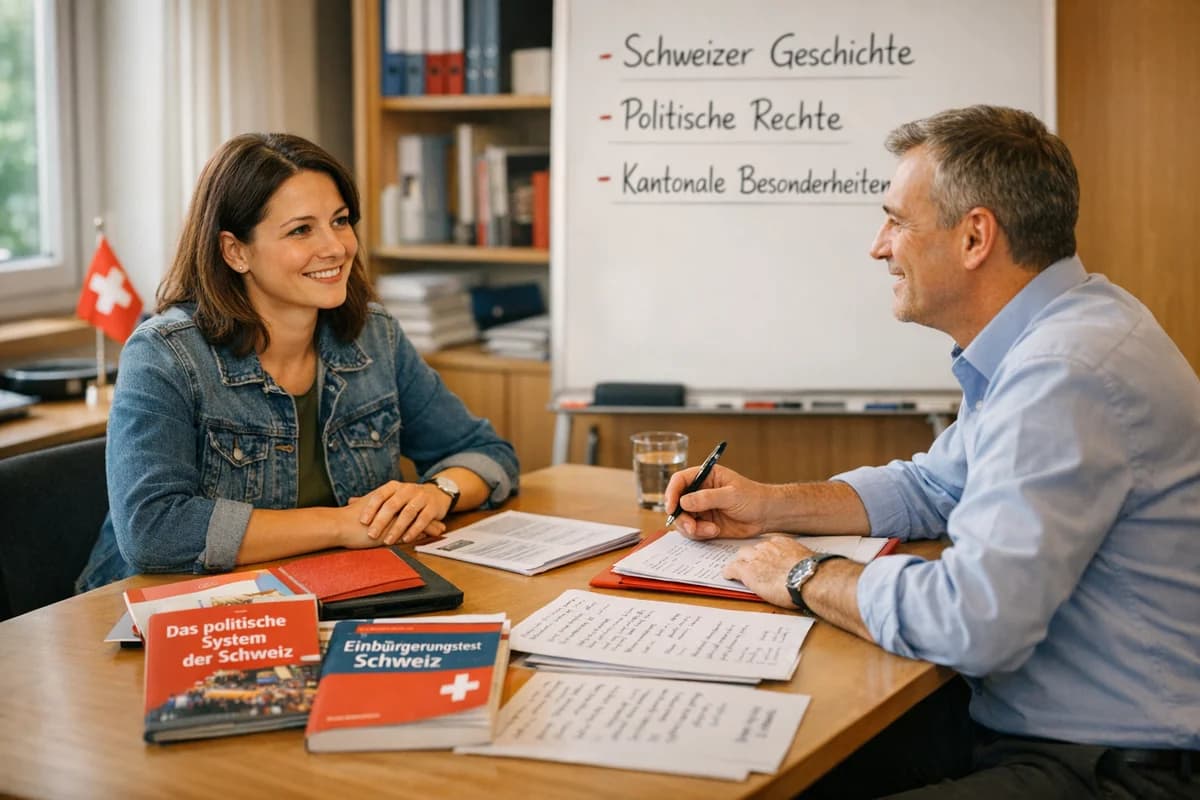
What Is the Einbürgerungsgespräch?
The Einbürgerungsgespräch (naturalization interview) is a personal conversation where officials assess your integration into Swiss society. Unlike the written citizenship test, this interview evaluates who you are as a person and how well you fit into Swiss life.
Not Everyone Has an Interview
In some cantons (like Bern), you take a written computer-based test instead. In others (like Zurich), you may have both a test and an interview. In some smaller municipalities, the interview is the main assessment method.
What They're Assessing
The interview evaluates three main areas:
- Basic knowledge of Switzerland – Geography, history, politics, customs
- Personal integration – Your connection to Swiss community and culture
- Language skills – Can you communicate in everyday situations
This isn't a trick or a test designed to fail you. It's a conversation to understand your genuine connection to Switzerland.
Format and Duration
- Length: 20-40 minutes typically
- Location: Municipal office (Gemeindehaus)
- Participants: Usually 1-2 officials from the municipality
- Language: Conducted in the local language (German/French/Italian)
- Style: Conversational, not interrogational
The officials want you to succeed. They're looking for evidence that you're genuinely integrated and will be a good Swiss citizen.
Common Interview Questions
While every interview is different, most officials cover similar topics. Here's what to expect:
Personal Questions (Warm-up)
- Tell us about yourself – your family, work, background
- How long have you lived in Switzerland?
- Why do you want to become Swiss?
- What does Swiss citizenship mean to you?
Knowledge Questions
- Geography: Can you name Swiss cantons? Major cities? Neighboring countries?
- History: When did Switzerland become a country? What's the Rütlischwur?
- Politics: How does Swiss democracy work? What's the Bundesrat?
- Canton-specific: Who's your cantonal government? What's the canton capital?
- Customs: What are Swiss traditions you celebrate? Any Swiss holidays?
Integration Questions
- Do you have Swiss friends? How did you meet them?
- Are you part of any clubs or associations here?
- What Swiss customs have you adopted?
- How do you spend your weekends? What are your hobbies?
- Can you describe a typical Swiss meal you enjoy?
Practical Questions
- What does "direct democracy" mean to you?
- How do federal taxes work in Switzerland?
- What would you do if you saw someone in need?
- How do you stay informed about Swiss news?
How to Prove Your Integration
The interview is primarily about proving you're genuinely integrated into Swiss society. Here's how to demonstrate that:
Show Personal Connections
Talk about real relationships and experiences:
✅ "My best friend is Swiss – we met at work 5 years ago" ✅ "I've been a member of the local tennis club for 3 years" ✅ "My children play in the Swiss youth orchestra" ✅ "We participate in the village Fasnacht celebrations every year"
❌ Avoid generic statements like "I love Swiss culture"
Demonstrate Cultural Knowledge
Show you understand Swiss life beyond textbooks:
- Mention Swiss foods you enjoy (Rösti, Fondue, Birchermüesli)
- Talk about local festivals you've attended
- Discuss Swiss news you follow
- Reference Swiss sports or athletes you follow
- Describe Swiss customs you've adopted (greeting with three kisses, recycling discipline)
Highlight Community Participation
Evidence of active participation matters:
- Volunteer work – Red Cross, fire department, community events
- Club membership – Sports clubs, music societies, cultural associations
- Parent involvement – School parents' association, youth sports coaching
- Neighborhood connections – Know your neighbors, participate in communal activities
Show Financial Independence
You'll likely be asked about:
- Your employment and its stability
- Your understanding of Swiss taxes
- Your health insurance situation
- Any social welfare dependence (past or present)
How to Prepare in 30 Days
A month of focused preparation can significantly boost your confidence and performance. Here's a strategic plan:
Week 1: Assess and Plan
- Day 1-2: Review your own story – why Switzerland, why citizenship, what it means to you
- Day 3-4: Gather evidence of integration – photos, certificates, club memberships
- Day 5-7: Identify knowledge gaps – take a practice test to see what you don't know
Week 2: Knowledge Building
- Study Swiss basics: geography, history, political system
- Focus on your specific canton – government, capital, key facts
- Learn about Swiss traditions, holidays, and customs
- Watch Swiss news and read a Swiss newspaper daily
Week 3: Practice and Refine
- Do mock interviews with a Swiss friend or family member
- Record yourself answering common questions
- Practice talking about your integration experiences
- Prepare specific examples and stories to share
Week 4: Final Preparation
- Review all your integration evidence – have it organized
- Choose your interview outfit – professional but comfortable
- Plan your journey – arrive early, know the location
- Get a good night's sleep before the big day
Daily Habits to Build:
✅ Read Swiss news every morning (20 minutes) ✅ Listen to Swiss radio during your commute ✅ Practice speaking Swiss German/French/Italian daily ✅ Talk to Swiss friends about your interview
Test Your Knowledge
Try 5 free questionsDay of the Interview – What to Do
The big day has arrived. Here's how to handle it like a pro:
Before the Interview
✅ Arrive 10-15 minutes early – shows respect and punctuality ✅ Dress professionally – business casual is appropriate ✅ Bring requested documents – have them organized in a folder ✅ Bring a notepad and pen – shows you're prepared and engaged ✅ Use the restroom beforehand – don't be uncomfortable during the interview ✅ Turn off your phone – silence it completely before entering
During the Interview
Body Language:
- Make eye contact with the officials
- Sit up straight and show interest
- Smile naturally – this is a conversation, not an interrogation
- Nod when you understand – shows active listening
Communication Tips:
- Speak clearly and at a moderate pace
- It's okay to say "I don't know, but I'm interested in learning"
- Give specific examples, not general statements
- Ask for clarification if you don't understand a question
- Be honest – they'll verify facts later
Red Flags to Avoid:
❌ Don't memorize scripted answers – sounds fake ❌ Don't brag or exaggerate – stay humble but confident ❌ Don't criticize Switzerland or compare it negatively to your home country ❌ Don't check your watch or look at your phone ❌ Don't interrupt the officials
After the Interview
- Thank the officials for their time
- Ask when you'll hear back about the decision
- Follow up with a brief thank-you note if you get their contact information
What Happens Next?
Post-Interview Timeline
Unlike the written test where you get immediate results, the interview decision takes time:
1-2 Weeks Later:
The municipality discusses your case and makes a recommendation. You typically won't hear anything during this period.
1-2 Months Later:
You'll receive written notification of the decision. This will come by mail.
If Approved:
- Congratulations! Your application moves forward to the cantonal level
- The interview was just one part – you still need cantonal and federal approval
- Continue demonstrating your integration while waiting
If Not Approved:
- You'll receive a letter explaining the reasons
- You have 30 days to appeal (Einsprache)
- You can also choose to wait and reapply later
- Focus on addressing the specific concerns raised
Remember:
The interview is important, but it's just one step in a longer process. A successful interview doesn't guarantee citizenship, and a difficult one doesn't mean rejection – officials look at your complete application holistically.
Final Tip:
Be yourself, be honest, and show genuine enthusiasm for becoming Swiss. That authenticity comes through and makes a positive impression.
Test Your Knowledge
Try 5 free questions