Schaffhausen Has No Cantonal Test: Each Commune Decides How to Check
Canton Schaffhausen runs no cantonal citizenship test, and its citizenship act names no test at all. Article 6 lists what makes an applicant suitable: integration into communal, cantonal and Swiss life, familiarity with the country's habits, customs and traditions, respect for the legal order, knowledge of the rights and duties of citizenship, sufficient German to deal with authorities and fellow citizens, and orderly personal and financial circumstances. How a commune checks that is its own affair, because the act leaves the decision on communal citizenship to the body named in each communal constitution.
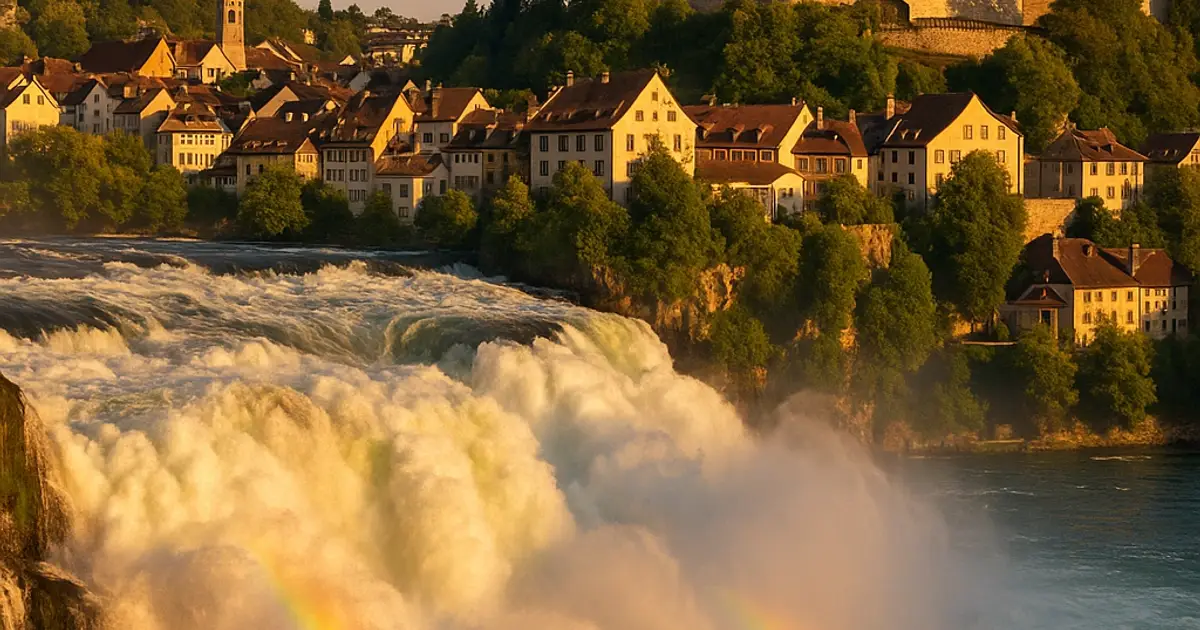
In practice that produces two models. The City of Schaffhausen invites you to a Vorstellungsgespräch, an interview led by a member of the Stadtrat with the chancellery's specialist and two delegates of the Grosser Stadtrat present; the Stadtrat then decides. Neuhausen am Rheinfall, the commune at the Rhine Falls, holds an oral exam in the ordinary procedure and a written exam in the simplified procedure, both preceded by a voluntary two-evening preparation course. The other 24 communes tell you at their chancellery; where the communal assembly decides, the Gemeinderat's proposal counts as accepted unless someone files a reasoned counter-motion.
Whatever the form, the content is the same: German, and basic knowledge of Switzerland, the canton and your commune. The Schaffhausen canton page lists every source behind this guide.
Who Can Apply: Permit, Two Years in the Commune, German
The federal frame comes first: a C permit and 10 years in Switzerland, 3 of them in the 5 years before filing, with years between ages 8 and 18 counting double. Schaffhausen adds surprisingly little on top. Article 7 of the cantonal act asks for two years of uninterrupted residence in the commune where you apply, and nothing more at cantonal level; the City of Schaffhausen wants those two years immediately before the application.
German is required at B1 spoken and A2 written, proven with the fide language passport or a recognised exam, which in the city you can sit at SAH Schaffhausen or the Klubschule Migros. You are exempt if you attended five years of compulsory school in German, completed a degree in German, finished Swiss vocational training with an EFZ (a pre-apprenticeship does not count) or speak German as your mother tongue, which the city spells out for German and Austrian nationals. Older certificates are not always accepted, so ask before you rely on one.
The rest is about an orderly life, and the city's information sheet is precise: no criminal-record entries and no pending proceedings, not even during the probation period of a suspended sentence; no debt-enforcement entries in the last five years unless they were demonstrably unjustified; no tax arrears, provisional bills included; no social assistance in the last three years; and an income from work or an AHV/IV pension that covers your living costs. Spouses each file their own application and must each qualify; minor children are included, and from 16 they sign a declaration of their own. Checked on 5 September 2026.
What the Interview Covers: the City's Brochure and Staatskundeschema
The City of Schaffhausen hands every applicant two documents, and they double as the syllabus. The brochure "Staatsbürgerliche Kenntnisse" opens with the sentence that matters: the Stadtrat will hold a conversation with you to find out how well you communicate in German and what you know about Switzerland and Schaffhausen. It then walks through the founding of 1291, the four national languages, the capital, the national holiday, eleven years of compulsory school, the three political levels, elections and votes, and the canton itself: 26 communes and around 82,000 inhabitants, the city with around 38,000, a Regierungsrat of 5 and a Kantonsrat of 60, a Stadtrat of 5 and a Grosser Stadtrat of 36, the local radio station Radio Munot and the clubs and associations you could join.
The Staatskundeschema 2026 is a one-page table of parliaments, governments and courts at federal, cantonal and city level with the current names: 200 National Councillors and 46 Councillors of States, Schaffhausen's two National Councillors and two Councillors of States, the seven Federal Councillors, the five members of the Regierungsrat, the presidents of the Kantonsrat and the Grosser Stadtrat and the five members of the Stadtrat. Expect to be asked who they are.
Neuhausen's course covers communal, cantonal and Swiss affairs and civics over two evenings, followed by the oral or written exam. Our 49 Schaffhausen questions cover the cantonal layer of all of this, from 1501 and 1529 to the Munot, the Rhine Falls and the 60 seats of the Kantonsrat.
Test Your Knowledge
Try 5 free questionsThe Procedure: Commune, SEM, Regierungsrat
Schaffhausen's order is commune first, Confederation second, canton last, and the cantonal decision is what makes everything else effective.
- Advisory meeting. In the city you start at the Stadtkanzlei, which checks the conditions and tells you whether you need a language certificate. Neuhausen asks you to book an appointment with the secretary of its naturalisation commission.
- Application. The forms for the application and the CV are online. Section 1 of the cantonal ordinance lists the attachments: the federal application form, certificate of residence, civil-status documents, copies of passport and permit, the debt-enforcement extract for five years, a tax certificate, the language proof, proof of work or education, the social-assistance certificate for three years and your school years in Switzerland. The city takes an advance equal to the expected fees.
- Enquiries. The commune establishes the facts itself, decides from the documents whether the simplified procedure applies and writes an enquiry report. You must report every change, from a new job to a move, while the file is pending.
- Interview or exam. The city's Vorstellungsgespräch, Neuhausen's oral or written exam, or whatever your commune provides. Hearings are recorded and go on file.
- Communal decision. The Stadtrat in the city, the Gemeinderat in the simplified procedure, elsewhere the body named in the communal constitution. A refusal must be reasoned.
- Federal authorisation. The commune sends its decision and the report to the Amt für Justiz und Gemeinden, which forwards the file to the State Secretariat for Migration.
- Cantonal citizenship. After the federal authorisation the Regierungsrat grants cantonal citizenship, and only at that moment does communal citizenship take effect. The Amt notifies you, the commune, the SEM and the migration office.
The City of Schaffhausen counts on about two years for the whole procedure; the canton publishes no figure. Nothing in the sources mentions a fixed waiting period after a refusal, so ask your commune before you reapply.
Costs: CHF 2,000 Fixed by Law, Half in the Simplified Procedure
Schaffhausen is one of the few cantons where the whole fee stands in the act. Article 16 of the cantonal citizenship act fixes the fee for the decision in the ordinary procedure at CHF 850 for the canton and CHF 1,150 for the commune, CHF 2,000 in total per application. Spouses naturalised together and children included in a parent's application pay it once. Article 17 halves it for the simplified procedure: CHF 400 for the canton and CHF 600 for the commune, CHF 1,000 in total. Swiss citizens from other cantons pay CHF 250 to the commune, and nothing after twelve years in the canton.
The same act says what happens when things go wrong: the decision is chargeable even after a refusal, a withdrawal costs a chancellery fee according to the work done, capped at the decision fee, and social hardship cases can be waived in full or in part. Cash expenses may be billed separately, and the City of Schaffhausen asks for an advance before it starts. Neuhausen am Rheinfall publishes its extras: a flat CHF 200 for expenses and CHF 285 per person for the preparation courses, free for children included in their parents' application.
The Confederation adds CHF 100 for a single person, CHF 150 for a married couple and CHF 50 for a minor applying alone. A single adult in the city therefore pays CHF 2,100 in official fees, before a language exam or translations. All figures checked on 5 September 2026.
Avoid Costly Retakes
View pricingHow to Prepare for the Interview
Read the city's brochure the way the Stadtrat reads it: as a list of things you should be able to say out loud. Practise explaining the three political levels, who elects the Regierungsrat and the Kantonsrat and how often, what a referendum and an initiative are, and why 1 August is the national holiday. Then learn the names on the Staatskundeschema, from the two Schaffhausen National Councillors to the five members of the Stadtrat, because the schema is updated every year for a reason.
Then go local. Know your commune's council and president, the districts of the canton, the Munot and its watchman, the Rhine Falls, Büsingen, the vineyards of the Klettgau and the date 1501, when Schaffhausen joined the Confederation. Our Schaffhausen question bank with 49 cantonal questions and the federal lessons covers that ground; Neuhausen's two-evening course and the city's brochure cover the rest.
Finally, rehearse German in conversation. Every model in the canton, the city's interview and Neuhausen's oral exam alike, starts from how well you can talk about your life here. If you need a certificate, book the fide exam early. For your own file, ask the Stadtkanzlei Schaffhausen, Stadthaus, Postfach 1000, 8201 Schaffhausen, +41 52 632 52 23, or your commune's chancellery; the canton's Amt für Justiz und Gemeinden at Mühlentalstrasse 105 takes over once the commune has decided.
Practice Anywhere
Download iOS App