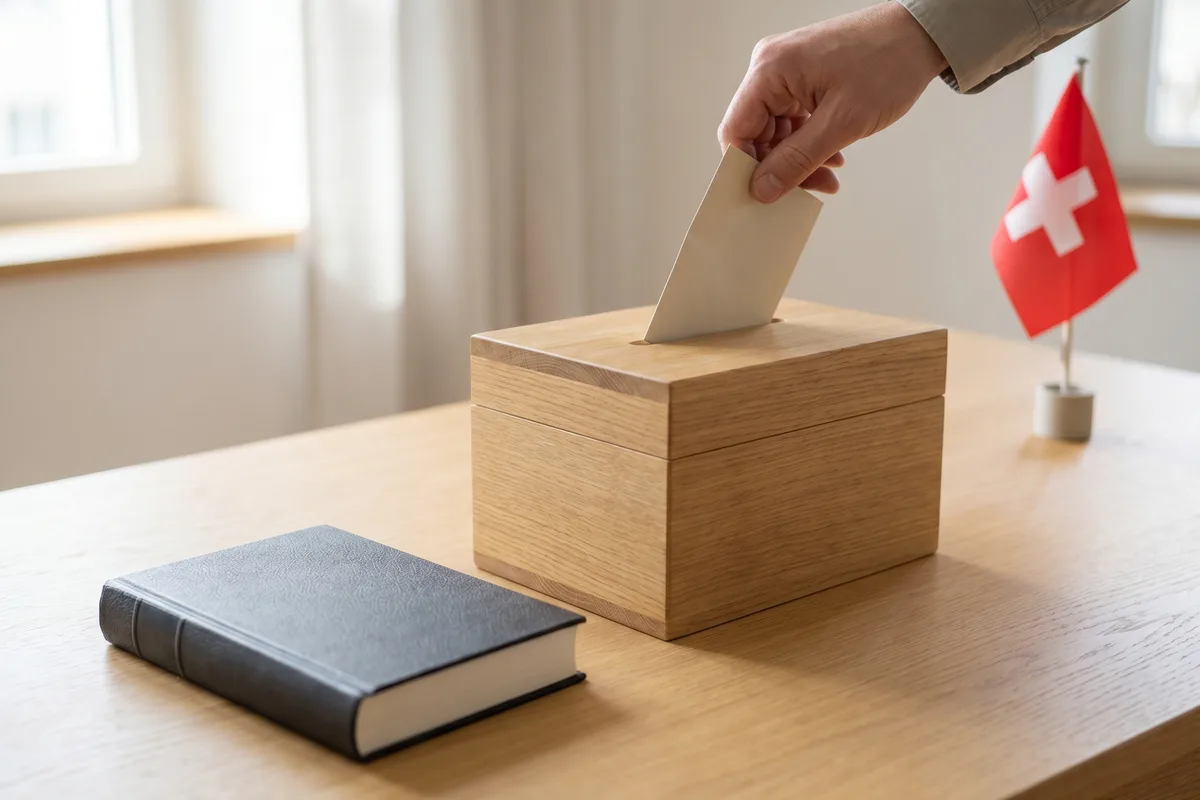
The Federal Constitution as the Foundation
Before you can talk about the rights and duties of Swiss citizens, you have to know where they come from. The answer is the Federal Constitution (Bundesverfassung). It is the highest legal document in the country: it sets out how Switzerland is organized, what the state may and may not do, and which rights belong to the people. Everything else – federal laws, cantonal constitutions, municipal rules – has to respect it. In the naturalization test and interview, examiners like to start here, because understanding the Constitution shows you understand the whole system.
The Constitution has a history worth remembering, because dates come up often. The first federal constitution dates from 1848, when the modern Swiss federal state was created out of a loose confederation of cantons. It was substantially revised in 1874, which strengthened federal powers and expanded direct-democratic rights. The current Constitution is a total revision that was adopted in 1999 and came into force on 1 January 2000. It did not reinvent Switzerland – it cleaned up, modernized and clearly wrote down the rules and rights that had grown over 150 years.
Two ideas from the Constitution matter most for this article. First, it guarantees fundamental rights (Grundrechte) – basic freedoms that protect every person against the state. Second, it organizes political rights (politische Rechte) – the tools through which Swiss citizens actually govern the country. The rest of this guide walks through both, plus the duties that come with living in and belonging to Switzerland.
If you want the full structure of who holds power and how the three levels of state fit together, read our overview of the Swiss political system. For the official text and a plain-language explainer, the federal portal ch.ch is a reliable starting point.
Fundamental Rights: For Everyone
Here is a point examiners love, and one many candidates get wrong: fundamental rights apply to everyone in Switzerland, not only to Swiss citizens. They protect residents, foreigners, tourists and citizens alike. They are human rights written into the Constitution, and they exist to limit what the state can do to any person on Swiss soil. So if you live here today without a Swiss passport, you already hold these rights – naturalization does not give you most of them.
The Constitution lists a broad catalogue of fundamental rights. The most important ones to know are:
- Human dignity – it must be respected and protected; it is the starting point of all other rights.
- Equality before the law – everyone is equal before the law; discrimination based on origin, sex, age, language, religion or way of life is forbidden.
- Freedom of belief and conscience – you may choose, practise or change your religion, or have none at all.
- Freedom of expression and information – you may form, hold and express your opinion freely, and access information.
- Freedom of assembly and association – you may meet peacefully and join, form or leave clubs, parties and organizations.
- Economic freedom – you may freely choose and exercise a profession and run a business.
- Protection of privacy – respect for your private and family life, your home and your correspondence.
- Right to property – your ownership is guaranteed; expropriation requires a legal basis and full compensation.
These rights are not unlimited. The Constitution allows restrictions, but only under strict conditions: a restriction needs a legal basis, must serve a justified public interest or protect others, and must be proportionate – the state may not go further than necessary. Understanding this balance – broad freedoms, narrow and well-justified limits – is exactly the kind of nuance that impresses in the interview.
Political Rights: For Swiss Citizens
If fundamental rights are for everyone, political rights are the part reserved for citizens – and they are the heart of what naturalization gives you at federal level. Political rights (politische Rechte) belong to Swiss citizens aged 18 and over who are not under comprehensive guardianship for reasons of mental incapacity. They are the reason Switzerland is often called the country where the people, not just Parliament, hold real power.
There are three main political rights to remember:
- The right to vote and to be elected – you may take part in elections and popular votes (Wahlen und Abstimmungen), and you may stand for office yourself, from the local council to the National Council.
- The popular initiative – citizens may propose a change to the Federal Constitution. If a committee collects 100'000 valid signatures within 18 months, the proposal goes to a nationwide vote.
- The referendum – citizens may challenge laws passed by Parliament. With 50'000 signatures within 100 days, a federal law is put to the people in an optional referendum; some decisions (like constitutional changes and joining certain international bodies) require a mandatory referendum automatically.
These tools are what make Switzerland a direct democracy rather than a purely representative one. Several times a year, citizens vote not only on who governs but on concrete questions – laws, constitutional changes and major projects. A successful initiative or referendum needs a majority of voters, and for constitutional matters also a majority of the cantons (the famous double majority).
This is one of the most heavily tested topics in the whole exam, so it pays to know it well. For a clear, step-by-step explanation of initiatives, referendums and how a vote actually works, read our dedicated guide to direct democracy. To see how these rights fit into Parliament, the Federal Council and the courts, our Swiss political system overview puts the full picture together.
Duties: What Is Expected of You
Rights come with responsibilities, and the Constitution is clear that living in Switzerland means accepting certain duties. Like most fundamental rights, the core duties apply to everyone who lives here, not only to passport holders. Knowing them – and being able to say that you accept them – is an important part of a successful naturalization interview.
The main duties expected of people in Switzerland are:
- Obey the law – everyone must respect the federal, cantonal and municipal laws. The rule of law is a basic condition of living together, and a clean record is also a formal requirement for naturalization.
- Pay taxes – residents pay taxes at federal, cantonal and municipal level to finance schools, roads, security, social insurance and public services. Paying your taxes on time is both a legal duty and something authorities check during naturalization.
- Send children to compulsory school – school attendance is mandatory (usually for about eleven years). Parents must ensure their children attend; education is free in public schools.
- Military or civilian service – military service is compulsory for Swiss men. Those who cannot reconcile it with their conscience may instead perform civilian service (Zivildienst), and there is a substitute tax for those who do not serve. For Swiss women, service is voluntary.
Beyond these legal obligations, Switzerland also expects a degree of civic participation and respect for the rules of living together – taking part in community life, respecting public order, separating your rubbish for recycling, and keeping the peace, especially during quiet hours. These are not all written as hard legal duties, but they reflect the shared expectations the interview often explores. Some citizens also take on civic functions, for example serving as a lay member of a local authority or commission, which is a normal part of the militia system that runs much of Swiss public life.
What Changes with Naturalization
By now you can see an important distinction that the test loves to probe: most fundamental rights and most duties already apply to you as a resident. So what actually changes when you become Swiss? The honest answer is narrower – but very valuable – than many people expect.
The two big additions are political rights at federal level and the Swiss passport. As a naturalized citizen aged 18 or over, you gain the full right to vote and be elected in federal elections and popular votes, and you may sign and launch initiatives and referendums. You move from someone the rules are made for to someone who helps make them. (Note that a number of cantons and communes already grant foreign residents some voting rights at local or cantonal level – but full political rights nationwide come only with citizenship.)
The Swiss passport brings its own set of practical advantages: the right to live and work in Switzerland permanently without a permit, freedom of movement to live and work across the EU and EFTA, strong consular protection abroad, and the security that you can never lose your right to stay. Citizenship is also typically passed on to your children. In exchange, your duties stay essentially the same as before – obey the law, pay taxes, and for Swiss men the service obligation now applies.
Naturalization is not automatic. You have to meet residence, integration and language requirements, show that you respect the Constitution and public order, and usually pass the knowledge test that this whole article helps you prepare for. For the full list of who qualifies and how the process works, read our guide to the naturalization requirements. And if you want a single resource that explains all these rights, duties and constitutional facts with practice questions, our complete handbook is built exactly for that.
Everything in one book
See the handbookConclusion – Why This Matters in the Test
Rights and duties are not just a chapter to memorize – they are one of the most frequently tested themes in the whole Swiss naturalization process, and they also signal something the authorities genuinely care about: that you understand and accept how Switzerland works. Examiners use these questions to check both your factual knowledge and your attitude toward the rules of the country you want to join.
Keep the core distinctions clear and you will handle most questions confidently. The Constitution of 1848 (revised 1874, totally revised in force 2000) is the foundation. Fundamental rights – dignity, equality, freedom of belief, expression, assembly, economic freedom, privacy, property – apply to everyone. Political rights – voting, being elected, the initiative and the referendum – belong to Swiss citizens from 18. Duties – obey the law, pay taxes, school your children, and for Swiss men do military or civilian service – apply broadly to residents. And naturalization mainly adds the full political rights and the passport, not a whole new set of basic rights.
If you can explain that structure in your own words, you are already ahead of most candidates. The questions you will face in the basic knowledge test are mostly multiple-choice versions of exactly these facts, so understanding the logic – rather than memorizing isolated answers – is what makes the difference on test day.
The most efficient way to lock it all in is to read a clear explanation and then test yourself on it. Our complete handbook does both in one place: it walks through the Constitution, the catalogue of rights, the duties and the naturalization process in plain language, then gives you exam-style practice questions with full explanations for CHF 19.90. Read it once, practise the questions, and these topics turn from something to fear into easy points.
Everything in one book
See the handbook