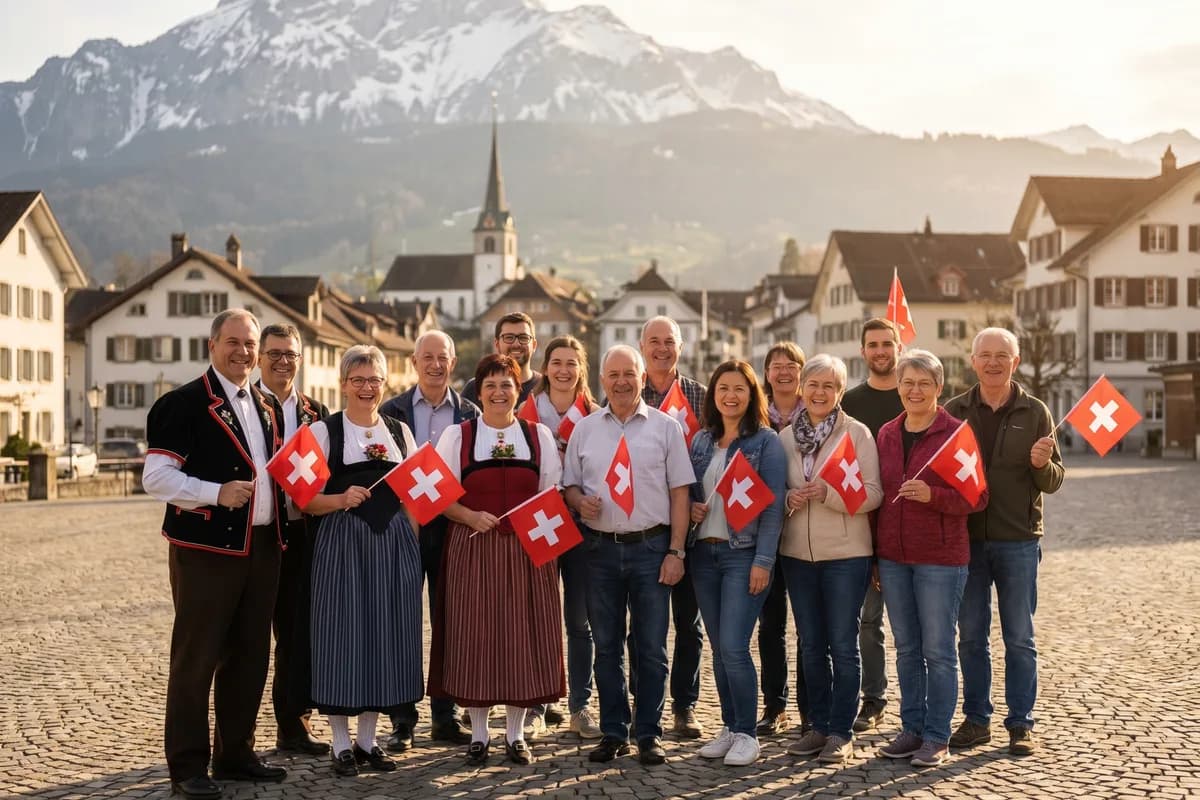
How Many People Became Swiss in 2025
In 2025, about 41,100 people were naturalised in Switzerland – roughly 33,500 through ordinary naturalisation and around 7,600 through facilitated naturalisation. (If you see the slightly higher figure of 41,269, that counts all acquisitions of citizenship, including a few hundred cases by declaration or adoption.) The Federal Statistical Office published the 2025 data in April 2026.
To put that in proportion: Switzerland's permanent resident population is about 9.1 million, of whom roughly 27% are foreign nationals – around 2.4 million people. Yet only about 2 to 3 in every 100 eligible residents naturalise in a given year. So becoming Swiss is common enough to fill a stadium each year, but still something only a minority of the eligible population does annually.
The split between ordinary and facilitated naturalisation is stable year after year: roughly 81% ordinary, 19% facilitated. Facilitated naturalisation is the faster federal route for specific groups – above all the spouses of Swiss citizens and the third generation. If you are not sure which route applies to you, our guide on ordinary versus facilitated naturalisation explains the difference.
Where New Swiss Citizens Come From
The largest groups of new citizens mirror Switzerland's biggest immigrant communities. In 2025 the top countries of origin were roughly (rounded figures):
- Germany – around 8,800
- Italy – around 4,200
- France – around 3,800
- Kosovo – around 2,100
- Portugal – around 1,800
- Turkey – around 1,400
- North Macedonia – around 1,300
- Spain – around 1,300
- Serbia – around 1,100
- United Kingdom – around 900
There is a counter-intuitive twist worth knowing. The largest resident communities do not always naturalise the fastest: long-established Italian and Portuguese residents naturalise relatively slowly as a share of their community, while some smaller communities convert at a higher rate. The reasons are a mix of how long people have lived here, whether their home country allows dual citizenship, and personal circumstances. None of that changes the requirements – but it does explain why the ranking by raw numbers looks the way it does.
The Big Canton Divide
Where you live changes your odds more than almost anything else. Looking at the naturalisation rate – naturalisations per 100 foreign residents with a settlement permit – the most recent cantonal figures (2023) show a striking spread:
- Highest: Vaud at roughly 5.5%, Geneva around 4%, and Zurich about 3.6% – all clearly above the national average of roughly 3%.
- Lowest: Appenzell Innerrhoden at around 0.3%, with other small rural cantons also near the bottom.
That is more than a tenfold gap between the most and least active cantons. In absolute numbers the picture is similar: in 2024, Zurich naturalised the most people by far (9,673), while Appenzell Innerrhoden naturalised just 7.
It is worth correcting a popular myth here: it is not the case that French-speaking cantons naturalise far less than German-speaking ones. In fact Vaud and Geneva – both French-speaking – are among the highest. The real divide is closer to urban versus rural: big, city-heavy cantons tend to naturalise at higher rates than small rural ones. For a side-by-side look at how cantons compare on tests and rules, see our canton comparison.
Success Rates and How Long It Takes
Two questions come up constantly: will I be refused? and how long will it take? Honest answers need a little care with the numbers.
Rejection rates. Switzerland does not publish a single clean national rejection rate, and quoted figures vary a lot depending on what is counted (formal refusals are rare; many “failures” are withdrawals or files that never complete). Estimates in the press put the real failure rate at roughly 10%, mostly tied to unmet residence time, financial dependence, or a criminal record. A concrete recent example: in Geneva, the cantonal migration office reported that in 2025 it refused 345 of 3,723 applications – about 9% – overwhelmingly because of criminal convictions. Treat any single percentage as an estimate, not gospel.
Timelines. Ordinary naturalisation typically takes around 18 to 24 months from application to decision, and can run to three years in the slower cantons. Facilitated naturalisation is usually faster, often 12 to 18 months. The biggest variables are your canton and commune and how complete your file is when you submit it. Our article on how long naturalisation takes breaks the stages down, and if a decision goes against you, what to do if your application is rejected covers your options.
What the Numbers Mean for You
Step back from the statistics and three practical lessons stand out.
First, naturalisation is normal and achievable – tens of thousands of people do it every year, from every kind of background. Second, your canton matters – the rate, the cost, the timeline and even the test format depend heavily on where you live, so plan around your commune, not the national average. Third, and most importantly, the part you fully control is preparation. Most refusals come down to requirements not yet met or a file submitted too early – not to a trick question on the test. Knowing the rules and passing the knowledge test cleanly are squarely within your power.
That is the real message behind the numbers: the statistics describe the landscape, but your own result is decided by getting your file right and knowing your civics. The most useful next step is simply to test where you stand – run a few mock exams, see your score, and turn the gaps into a study plan. A strong, accurate preparation is what moves you from a statistic into a new citizen.
Test Your Knowledge
Try 5 free questions